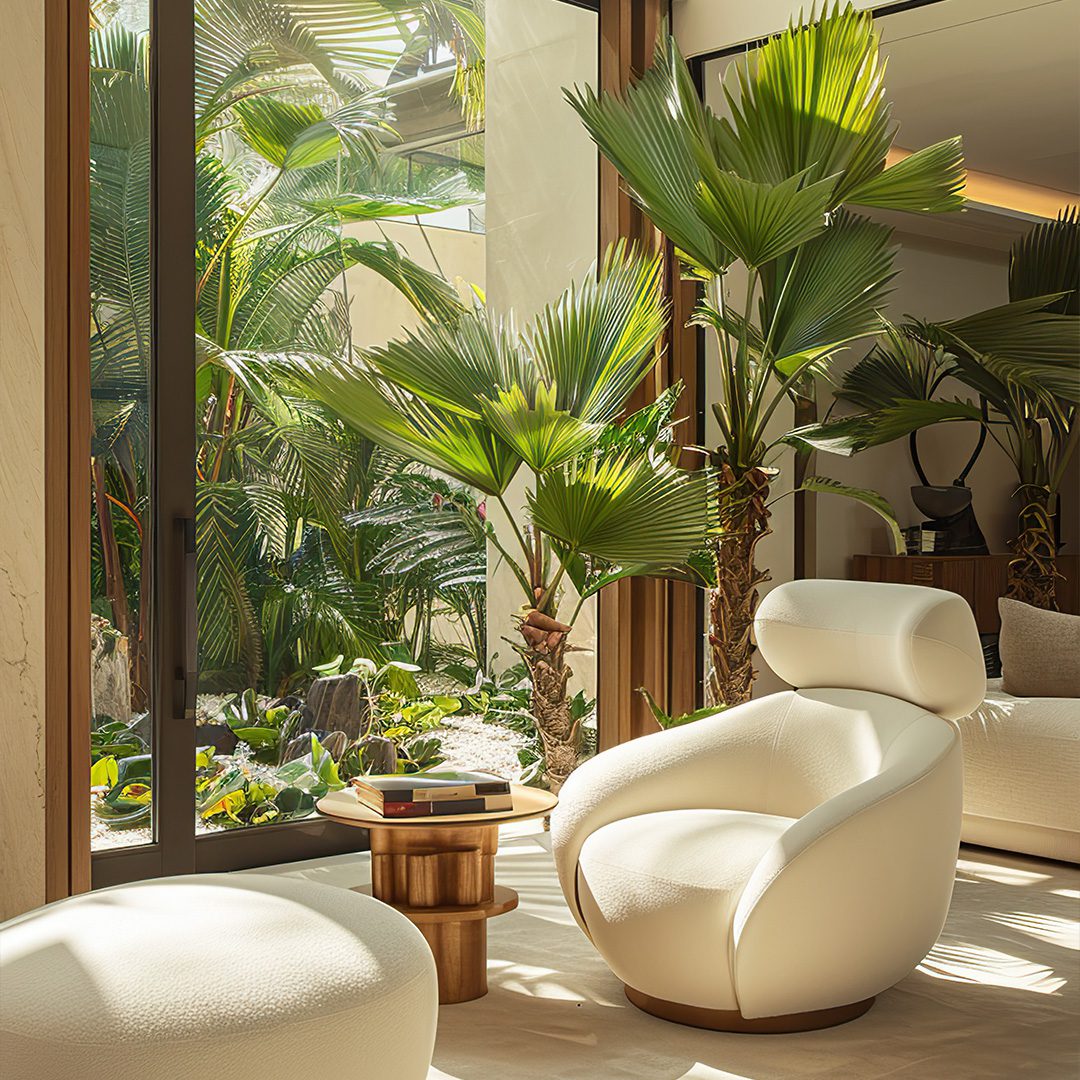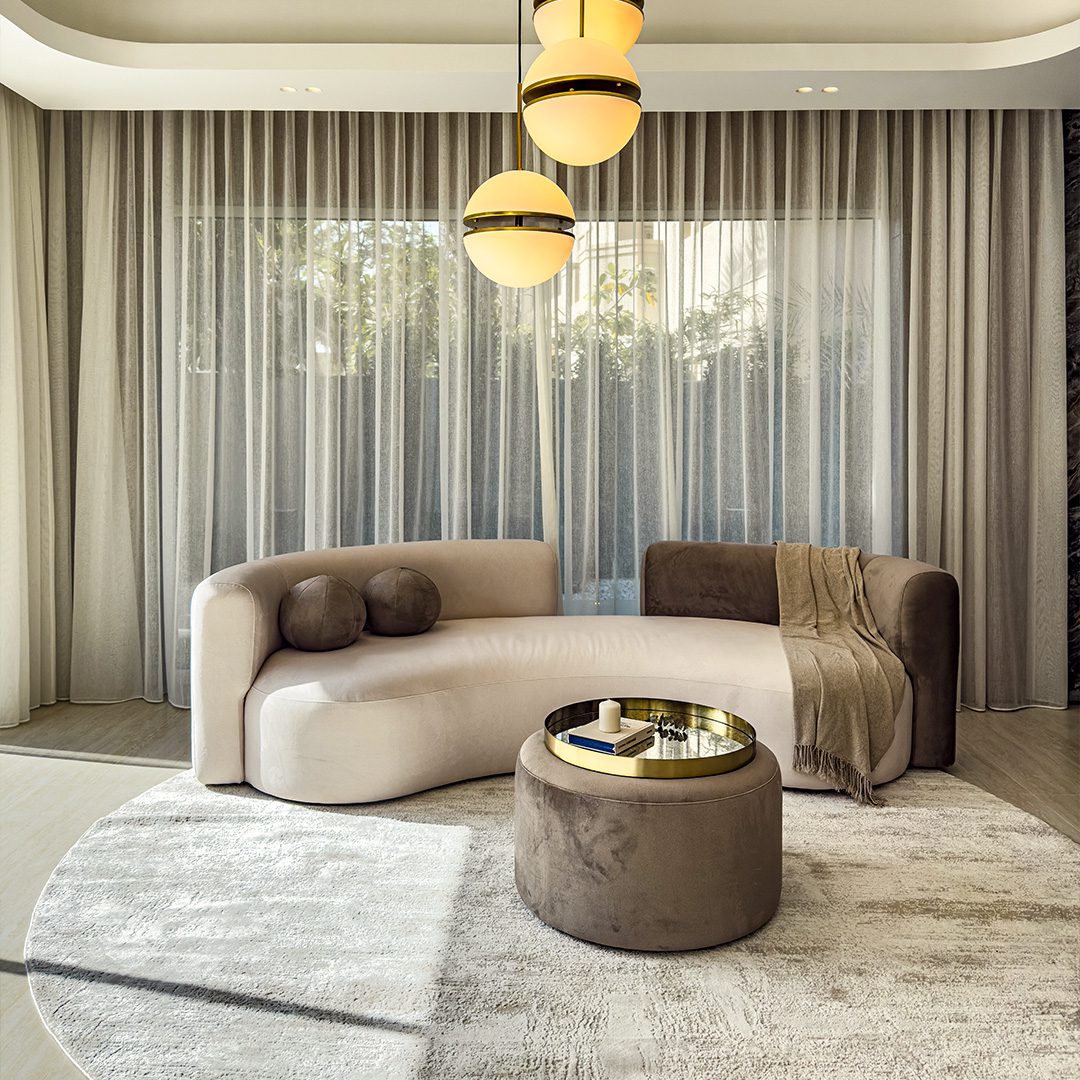

Biophilic interior design in a Dubai villa is the deliberate practice of weaving natural light, living plants, and organic materials into a home, not as decoration added at the end, but as a genuine part of how the space is planned from the start. It’s become one of the defining directions in Dubai villa design, and the reason isn’t purely aesthetic. In a city built on air-conditioned interiors and desert extremes, bringing real nature indoors solves a psychological need that glass, steel, and stone alone can’t. Here’s what it actually involves and how to get it right in this specific climate.
What Is Biophilic Design?
Biophilic design is the intentional integration of natural elements, light, air, plants, water, organic materials, and living systems, into the built environment, based on the idea that humans have an innate need for connection to nature that doesn’t disappear just because we live in cities. It’s a genuinely different approach from simply adding a few potted plants to a room. Real biophilic design shapes layout, material choice, and light planning around that connection from the earliest design stage.
In a Dubai villa specifically, this typically shows up as living walls integrated into circulation spaces, natural materials chosen for how they age and feel rather than how they photograph, and layout decisions that maximise genuine daylight and outdoor connection rather than compensating for its absence with artificial substitutes.
The distinction from other current interior trends matters here too. Where warm minimalism focuses on palette and restraint, biophilic design specifically centres living, natural systems as part of the home’s daily experience. The two overlap heavily in practice, natural materials and warm tones support both, but biophilic design goes further by treating actual plant life and natural light as structural design elements, not just a mood.
How It Works in Desert Climates
Bringing biophilic design into a desert climate is a genuinely different technical challenge than doing the same thing somewhere naturally green and humid, and getting this wrong is why so many well-intentioned indoor plant installations in Dubai fail within a year.
Dubai’s interiors are heavily climate-controlled, and continuous air conditioning creates persistently low indoor humidity, a very different environment from the tropical or temperate conditions many popular houseplants evolved for. This means biophilic design here depends on selecting the right species and support systems from the start, rather than treating any leafy plant as interchangeable with any other.
Automated irrigation and, for larger living wall installations, humidity management systems have become a genuine technical requirement rather than an optional upgrade in Dubai’s climate. This is part of why biophilic elements planned into a project’s MEP design from the outset perform so much more reliably than plants or living walls added as an afterthought once construction is complete.
Orientation and glazing decisions also carry more weight here than in milder climates. North-facing glazing brings in soft, indirect daylight without the intense solar heat gain that south and west-facing glass carries in this region, letting a villa maximise natural light exposure, a core biophilic goal, without working against the home’s cooling load. This is exactly the kind of decision that needs to be made at the design stage, since retrofitting glazing orientation after a villa is built simply isn’t possible.
Materials: Stone, Wood, Rattan
Material choice is where biophilic design becomes tangible day to day, and the goal throughout is materials that read as genuinely natural, not just neutral in colour.
Natural stone, travertine and limestone in particular, has become closely associated with biophilic interiors in Dubai, valued for its organic veining and the sense of solid, grounded permanence it brings to a space. Honed rather than polished finishes reinforce this further, keeping the material’s tactile, natural quality front and centre rather than treating it as a purely decorative surface.
Timber, in warm, natural tones rather than the darker stained finishes more common a decade ago, brings a genuinely organic texture to floors, joinery, and feature walls. Its visible grain and the way it ages over years, rather than staying static, is itself part of biophilic design’s appeal, a material that feels alive in a way engineered surfaces don’t.
Rattan and woven natural fibres have moved from occasional accent pieces to a more central role in Dubai villa interiors, appearing in furniture, light fixtures, and wall panelling. Their handmade, organic texture adds warmth and visual interest without introducing pattern or colour that would compete with a room’s broader palette, making them a natural complement to the warm, neutral tones already common across current Dubai interior trends.
Plants and Living Walls in Dubai Homes
Plants are the most visible expression of biophilic design, and also where most Dubai homeowners run into trouble without the right guidance on species and placement.
Species selection matters enormously in this climate. Plants that genuinely thrive in Dubai’s air-conditioned, low-humidity interiors, snake plants, ZZ plants, pothos, peace lilies, rubber plants, and fiddle-leaf figs in well-lit positions, consistently outperform more delicate tropical species that struggle against continuous cooling and dry indoor air. Avoiding placement near direct air conditioning vents, where cold, dry airflow stresses plants regardless of species, is a simple but frequently overlooked detail.
Living walls have become one of the signature features of biophilic villa design here, used to line entryways, frame staircases, or anchor a courtyard as a genuine architectural feature rather than a decorative afterthought. Beyond appearance, a well-installed living wall provides real functional benefit, additional insulation, improved air quality, and softened acoustics in the space it occupies. Drought-tolerant, low-maintenance species paired with automated drip irrigation are what make these systems sustainable long term in this climate, rather than becoming a maintenance burden that gets abandoned within a year.
Rather than concentrating greenery in a single showcase area, the strongest biophilic villa projects distribute plants throughout daily circulation paths, entryways, staircases, transitions between rooms, so residents encounter natural elements as part of how they actually move through the home, not as a single feature they walk past occasionally.
Natural Light Optimization
Natural light is arguably the single most important biophilic element, and the one most directly shaped by decisions made at the design stage rather than added afterward.
Floor-to-ceiling glazing, oriented to capture soft, indirect light rather than harsh direct sun, floods interiors with the kind of natural light biophilic design depends on while avoiding the solar heat gain that would work against the home’s cooling performance. Clerestory windows, positioned higher on a wall, are an increasingly used technique for pulling daylight deep into a room’s interior while keeping lower wall sections solid, useful in rooms where full-height glazing isn’t practical or desirable for privacy.
Light wells and internal courtyards, a traditional Gulf architectural feature reintroduced into contemporary Dubai villa design, bring genuine daylight into the deeper interior of larger homes, spaces that would otherwise depend entirely on artificial lighting regardless of how much glazing exists on the perimeter walls.
The connection between natural light and the rest of a biophilic scheme is direct and practical too. Plants genuinely need adequate light to thrive long term, which means the natural light plan and the planting plan for a Dubai villa should be developed together, not sequentially, since a beautifully specified living wall in a poorly lit corridor is a maintenance problem waiting to happen.
ROI for Villa Owners
Biophilic design carries a real, quantifiable logic for villa owners beyond its wellbeing and aesthetic benefits, and understanding the timing of that investment matters as much as the design itself.
The clearest financial principle is that biophilic elements specified at the concept stage cost meaningfully less than the same features retrofitted into a completed villa. A living wall planned alongside the building’s irrigation and drainage systems from the start avoids the cost and disruption of adding plumbing and drainage into finished walls later. Glazing specified for orientation and solar performance from the outset avoids the double cost of adding external shading elements after the fact to correct a heat gain problem that better initial planning would have avoided.
There’s a genuine cooling cost argument too, since well-placed greenery and living walls contribute real insulation and reduce heat absorption on the elevations they cover, translating into measurably lower cooling loads over the home’s lifetime in a climate where air conditioning represents a significant ongoing cost.
On resale, buyers in Dubai’s luxury villa market increasingly view genuine natural material and greenery integration as a marker of a considered, well-executed renovation rather than a purely cosmetic addition, distinguishing a home from the many villas offering similar square footage without the same sense of considered, livable design. For owners planning a renovation with resale in mind, biophilic elements integrated thoughtfully from the design stage consistently read as a meaningful part of a property’s overall quality story, not an isolated feature.
Bring biophilic design into your villa
Biophilic design works best when it’s planned into a villa’s architecture and systems from the very beginning, not layered on afterward. If you’re planning a renovation and want nature woven genuinely into your home’s design, talk to the Leif team about what’s possible for your space.
Frequently Asked Questions
Can indoor plants actually survive in Dubai’s air-conditioned villas? Yes, with the right species selection. Snake plants, ZZ plants, pothos, peace lilies, and rubber plants are well suited to low-humidity, air-conditioned interiors, provided they’re kept away from direct air conditioning vents.
Do living walls need special maintenance in Dubai’s climate? Yes, most successful living walls rely on automated drip irrigation and drought-tolerant species chosen specifically for the region, since Dubai’s low indoor humidity makes manual watering alone unreliable long term.
Is biophilic design more expensive than a standard villa renovation? Not necessarily, and timing matters most. Biophilic elements specified at the concept stage, alongside irrigation, glazing orientation, and structural planning, cost considerably less than retrofitting the same features into a finished villa.
How is biophilic design different from warm minimalism? The two overlap but aren’t identical. Warm minimalism focuses on palette and restraint, while biophilic design specifically centres living plants, natural light, and organic systems as core, functional parts of the home.
Does biophilic design actually reduce cooling costs in a Dubai villa? Yes, to a meaningful degree. Living walls and well-placed greenery provide genuine insulation and reduce heat absorption on covered elevations, contributing to lower cooling loads over the home’s lifetime.