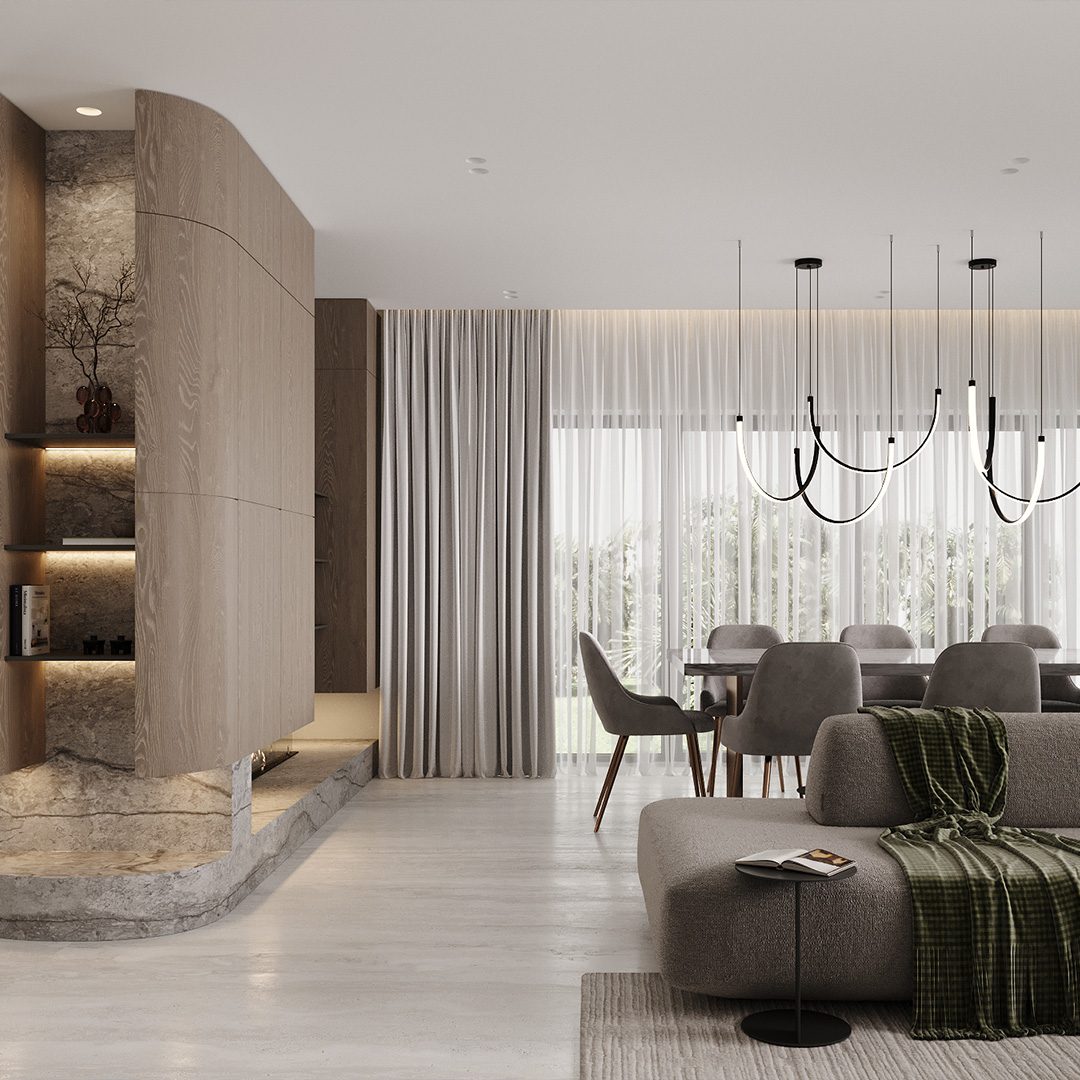

“Is design and build more expensive?” is one of the most common questions homeowners ask before committing to a renovation model, and the honest answer is that it depends what you’re comparing it against. Compared to a bare-bones traditional contractor, yes, usually. Compared to hiring an architect and a separate contractor for the same finished result, often not, once the full cost of both approaches is actually tallied.
Quick Answer
Design and build fees in Dubai are typically built into the overall project cost rather than charged as a separate line item, and the model itself doesn’t usually add cost compared to hiring an architect and contractor separately for equivalent work, it often avoids the redesign and repricing costs that occur when a separately commissioned design comes back over budget once priced by a contractor. A full villa renovation under design and build typically runs AED 250 to AED 1,200 per square foot depending on scope and finish level, the same broad range as villa renovation generally, since design and build is a delivery method, not a separate cost category.
How Design and Build Pricing Actually Works
Unlike hiring an architect for a fixed design fee and then a contractor for construction, design and build typically prices the whole project as one scope, with design, engineering, and construction costs rolled into a single itemised bill of quantities rather than billed as two separate contracts. This matters because it changes how cost certainty develops through the project.
| Design and Build | Architect Then Separate Contractor | |
| Design fee | Usually embedded in the overall project cost | Charged separately, often 8 to 15 percent of construction value |
| Construction pricing | Developed alongside design, checked against real costs as it progresses | Only confirmed once the architect’s finished drawings go to tender |
| Risk of budget mismatch | Lower, since design and pricing move together | Higher, since design is often finalised before construction cost is confirmed |
| Total cost if design needs revision after pricing | Rarely applies, since pricing develops with design | Can require paying the architect again for redesign |
Where the Actual Money Goes
For a full villa renovation under design and build, the largest cost categories remain the same regardless of delivery model, it’s the risk of cost surprise, not the underlying construction pricing, that changes.
- Cabinetry and joinery typically absorb the largest single share of an interior renovation budget, particularly in kitchens
- Structural and MEP work, when involved, adds engineering and permit costs on top of the physical construction
- Material specification drives cost more than almost any other single factor, the gap between standard porcelain tile and imported natural stone can be a significant multiple per square metre
- Approvals and NOC fees, typically AED 2,000 to AED 12,000 depending on community, plus any applicable GFA fee for extensions
For a full breakdown of construction costs by room and villa size, see our complete villa renovation cost guide, which covers per-square-foot ranges in detail. This piece focuses specifically on how the design and build delivery model itself affects cost certainty, rather than the underlying construction pricing.
Why Design and Build Often Ends Up Cheaper in Practice
The counterintuitive part of this comparison is that design and build, despite sometimes looking like the pricier option on paper, frequently costs less in total than the separate model once redesign and repricing costs are accounted for. When an architect designs in isolation from construction pricing, it’s common for a contractor’s eventual quote to land meaningfully above what the homeowner expected, at which point the choice becomes paying again for a scaled-back redesign, or absorbing the higher cost.
Under design and build, because the same team pricing the project is also designing it, material and construction costs are checked against the design as it develops, catching a budget mismatch while it’s still cheap to adjust rather than after drawings are finished and priced.
Getting an Apples to Apples Comparison
When comparing quotes across different design and build firms, or between a design and build firm and a separate architect and contractor arrangement, price alone tells you very little without matching specification. A few things worth confirming before comparing two numbers directly:
- Are both quotes working from the same material specification, named brands and products, not general descriptions
- Does either quote include NOC and permit handling, or is that billed separately in one and included in the other
- Is a warranty period included, and for how long, since this affects total cost of ownership even if it doesn’t appear in the upfront number
- Does the quote include FF&E, styling, and landscaping, or only the construction shell
A lower headline number that excludes several of these is not actually a lower total cost, it’s an incomplete comparison.
Budgeting Realistically From the Start
A sensible sanity check that applies regardless of delivery model: a full renovation typically lands between 7 and 12 percent of the property’s value. Below that range, corners are likely being cut somewhere in the specification. Well above it, either ultra-luxury finishes are being specified, or it’s worth being confident the community and resale market actually support that level of investment.
Holding a contingency of 10 to 15 percent on top of the agreed budget is standard practice across delivery models, specifically to cover issues that surface once work begins, deteriorated MEP infrastructure, waterproofing failures, or structural surprises in an older villa, none of which show up during an initial site visit but are common enough to plan for rather than hope to avoid.
Frequently Asked Questions
Is design and build more expensive than hiring an architect and contractor separately?
Not typically, and it often ends up less expensive overall. Because design and construction pricing develop together under design and build, it avoids the common scenario where a separately commissioned architect’s finished drawings come back over budget once a contractor prices them, requiring costly redesign.
Do design and build companies charge a separate design fee?
Usually not as a distinct, separate charge. Design costs are typically embedded within the overall project’s itemised bill of quantities rather than billed as a standalone fee, though it’s worth confirming this explicitly when comparing quotes.
What’s a realistic renovation budget as a percentage of property value?
A full renovation typically lands between 7 and 12 percent of the property’s value as a reasonable sanity check. Figures well outside that range are worth examining closely, whether that means corners are being cut or the investment level doesn’t match the community’s resale profile.
How much contingency should I budget on top of a design and build quote?
10 to 15 percent, regardless of delivery model. This covers issues that surface once work begins and aren’t visible during an initial site assessment, which is common enough in Dubai’s villa stock to plan for as standard practice rather than an unlikely exception.
Financing and Payment Structures Worth Understanding
Beyond the headline construction cost, it’s worth understanding how a design and build company structures payment across the project, since this affects both cash flow planning and risk. A well-run payment schedule ties instalments to completed, verifiable milestones, design sign-off, structural completion, first fix, final finishing, rather than a small number of large, calendar-based payments that don’t correspond to actual progress on site. A schedule weighted heavily toward a large upfront deposit before meaningful work has started shifts risk onto the homeowner, since it reduces the leverage available if the project stalls early.
Some homeowners also explore renovation financing through UAE banks, where the property itself can act as collateral against a renovation loan. If financing is part of your plan, confirm early whether your chosen design and build company’s payment schedule aligns with your lender’s disbursement structure, since a mismatch between when the bank releases funds and when the contractor expects payment is a genuinely common source of avoidable friction partway through a project.
Where Homeowners Most Often Overspend Without Realising It
A pattern worth naming directly: the gap between an initial budget and final spend is rarely caused by the big-ticket items, since those are usually priced clearly upfront. It’s the accumulation of smaller, individually reasonable decisions made during the design phase, an upgraded tap here, a slightly larger format tile there, that quietly pushes a well-planned budget past its original ceiling. Tracking these additions against the original budget as they’re approved, rather than only reviewing total spend at the end, is a simple habit that prevents this kind of gradual overspend from becoming a surprise at final invoicing.