
The questions that matter when vetting a design and build company change once the project crosses into genuinely luxury territory, a villa in Emirates Hills, District One, or a waterfront Palm Jumeirah plot, where budgets run into the millions and the margin for a mismatched material choice or a mishandled timeline is measured differently than on a standard family villa renovation.
Quick Answer
At the luxury tier, vetting a design and build studio in Dubai means going beyond the standard licensing and warranty checks to specifically scrutinise bespoke material sourcing capability, discretion and privacy practices, portfolio verification at a comparable price point, and whether the studio has genuine experience with your specific community’s design review process, since ultra-luxury communities often apply more scrutiny at approval stage than standard villa communities.
Why the Standard Checklist Isn’t Quite Enough
A general vetting checklist, licensing, warranty, itemised pricing, still applies at every price point, and it’s covered in detail in our checklist for choosing a design and build company in Dubai. At the luxury tier, a few additional considerations become genuinely important rather than optional extras, because the stakes of getting them wrong scale with the project.
Bespoke Material Sourcing Is a Different Capability
Luxury villa renovations commonly specify materials that aren’t available through standard local suppliers, book-matched natural stone, imported European joinery, custom metalwork. This requires a genuinely different sourcing capability than a firm accustomed to standard finishes, including established relationships with international suppliers, an understanding of realistic lead times for custom production, and experience managing the customs and import process for high-value goods.
Ask specifically for examples of bespoke material sourcing on past projects, not just a supplier list, since a genuine track record shows up in specifics, lead times actually achieved, issues actually resolved, rather than a general claim of “access to the best suppliers.”
Discretion and Privacy Matter More at This Tier
Luxury villa communities, particularly Emirates Hills and District One, often house high-profile residents for whom privacy during a renovation is a genuine, practical concern, not a preference. A studio experienced at this level should be able to speak concretely about how site access, worker vetting, and confidentiality around project details are managed, rather than treating this as an unusual request.
- How site access is controlled and logged during construction
- Whether non-disclosure agreements are standard practice for luxury projects, not something requested reluctantly
- How photography and portfolio use is handled, since a homeowner may not want their specific villa publicly identifiable even after completion
- Whether the studio can accommodate a project that needs to proceed with minimal visible activity or disruption to the surrounding community
Portfolio Verification at the Right Price Point
A firm with an impressive portfolio of AED 300,000 renovations doesn’t automatically translate to competence on a AED 3 million project. The skills genuinely differ, sourcing and coordinating bespoke materials, managing a larger and more specialised trade team, working within the stricter design review processes common to communities like Emirates Hills. Ask specifically for references and portfolio examples at a comparable budget and specification level to your own project, not just the highest-value project the firm has ever completed once, years ago.
Community-Specific Design Review Experience
This is where luxury renovation genuinely diverges from standard practice. In a community like Emirates Hills, there’s no single repeated architectural style to check a design against, each villa is individually assessed on its own architectural merit, which means Design Review Committee review here tends to involve considerably more back and forth on materials and proportions than in a more template-driven community. A studio without direct Emirates Hills experience specifically may be working from general Emaar familiarity rather than knowledge of how design review actually plays out in this particular community.
| Community | What luxury vetting should specifically confirm |
| Emirates Hills | Experience with individually assessed, non-template design review |
| District One | Familiarity with Meydan’s design review standards and the community’s three distinct architectural styles |
| Palm Jumeirah | Direct experience with Nakheel’s above-parapet restrictions and geotechnical requirements for reclaimed land |
| Al Barari | Experience designing within the community’s protected landscape and garden preservation rules |
Questions Specific to This Tier
Beyond the general checklist, a few additional questions are worth asking directly when vetting a studio for a genuinely luxury project.
- Can you show me sourcing examples for bespoke or imported materials on a comparable past project?
- What is your standard approach to site confidentiality and worker vetting for high-profile clients?
- Do you have direct experience with design review in my specific community, not just general familiarity with the developer?
- Can you provide references at a comparable project value to mine?
- How do you handle a bespoke material’s lead time if it runs longer than expected, and how is that communicated?
Budget Ranges Worth Understanding at This Tier
Luxury villa renovations in communities like Emirates Hills, District One, and larger Palm Jumeirah plots typically run well beyond the AED 250 to AED 1,200 per square foot range that covers standard Dubai renovation, often exceeding AED 1,500 per square foot once bespoke joinery, imported stone, and full smart home integration are specified throughout. This isn’t a sign of inefficiency, it reflects genuinely different material and labour inputs, specialist trades, longer international lead times, and a level of finish quality that simply costs more to achieve well. A studio quoting significantly below this range for a genuinely comparable scope is worth questioning closely, since the gap is more likely to reflect a lower actual specification than an unusually good deal.
Patience as Part of the Vetting Process
One quieter signal worth paying attention to is how a studio behaves during the vetting process itself. Luxury renovations reward patience, in sourcing the right material, in getting a design review submission right the first time, in resolving a bespoke detail properly rather than rushing it. A studio that seems eager to close the sale quickly, rather than taking the time to understand your specific brief and community requirements in the first meeting, is showing you something about how they’re likely to approach the more demanding, detail-heavy parts of an actual luxury project later.
Frequently Asked Questions
Does a luxury villa renovation need a different design and build company than a standard one?
Not necessarily a different company, but genuinely different vetting. The core standards, licensing, warranty, itemised pricing, still apply. What changes is the added importance of bespoke sourcing capability, discretion practices, and community-specific design review experience, none of which show up on a standard checklist.
Why does community-specific experience matter more for luxury villas?
Communities like Emirates Hills assess each villa’s design individually rather than against a fixed community palette, which means review tends to involve more back and forth on materials and proportions. A studio without direct experience in that specific community may be working from general assumptions rather than real knowledge of how approval actually plays out there.
Should I ask about privacy and discretion when vetting a luxury design and build studio?
Yes, and a studio experienced at this level should answer concretely, covering site access control, non-disclosure practices, and how portfolio photography is handled, rather than treating the question as unusual.
What’s the biggest mistake homeowners make when choosing a studio for a luxury renovation?
Judging a portfolio by its highest-value project alone rather than asking for references and examples at a comparable budget and specification to their own project. The skills required to manage a bespoke, high-value renovation well don’t automatically transfer from a single standout project years earlier.
Why Scale of Team Matters at This Level
A luxury villa renovation typically involves a wider and more specialised trade base than a standard renovation, specialist stone masons, bespoke metalwork fabricators, smart home integrators working at a genuinely high-end tier, alongside the usual structural, MEP, and joinery trades. A studio’s ability to manage this larger, more specialised team is a distinct capability from managing a standard renovation crew, and it’s worth asking directly how many concurrent specialist trades the studio has coordinated on a single past project, rather than assuming general renovation experience translates automatically to this scale.
This also affects how realistic a quoted timeline actually is. A studio unfamiliar with sourcing and scheduling specialist trades at this level may underestimate how long coordination genuinely takes, producing an optimistic timeline that doesn’t hold up once the project is underway. Asking for a real, completed example of a similarly complex project’s actual timeline, not the one originally quoted, is a more reliable way to judge this than taking a new estimate at face value.
The Value of a Design Language That Understands Restraint
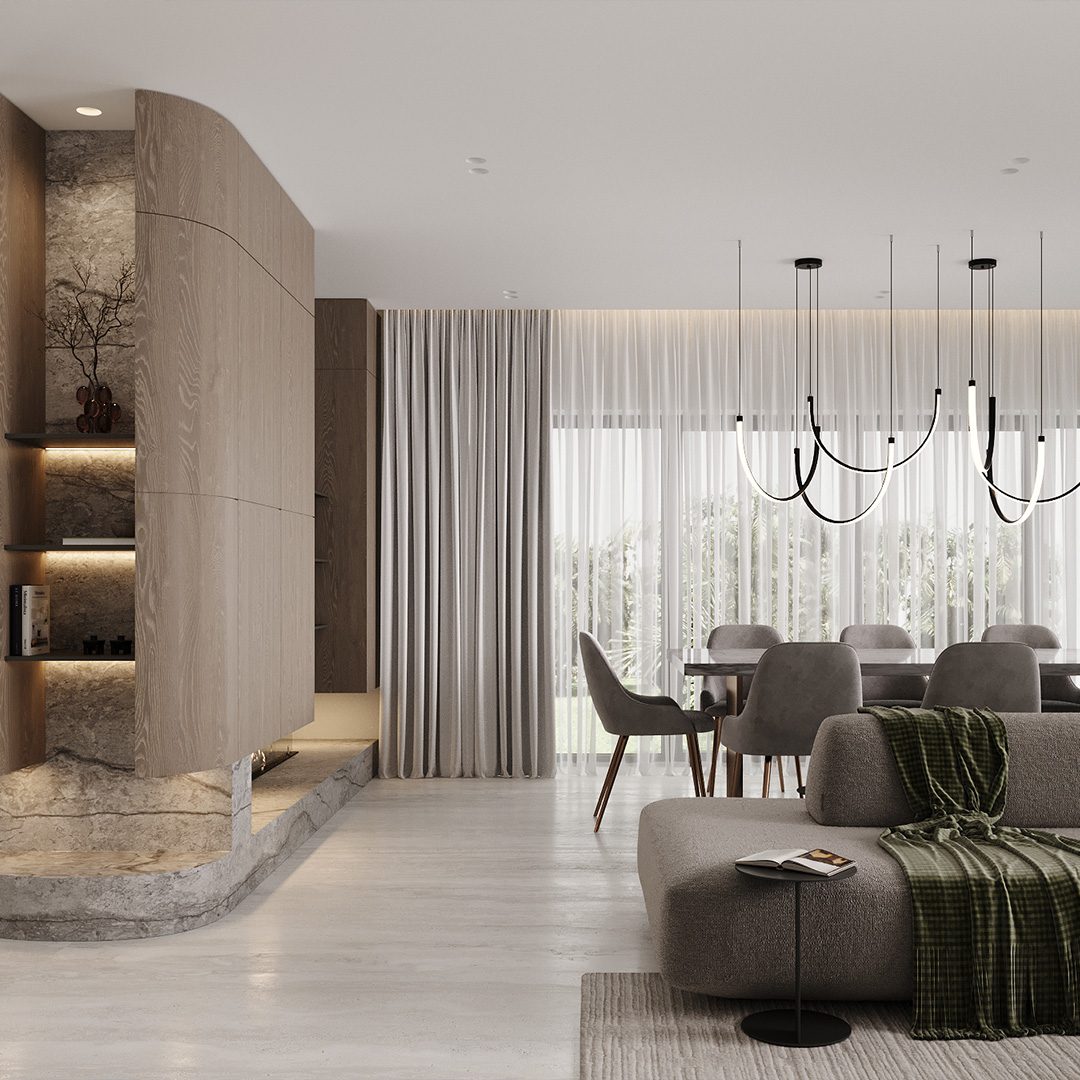
At the highest tier of Dubai villa renovation, the strongest work often shows real restraint rather than maximalism for its own sake, a considered material palette, well-resolved proportions, and craftsmanship that doesn’t need to shout to be recognised. When reviewing a studio’s portfolio, it’s worth distinguishing between work that photographs impressively and work that would genuinely feel calm and considered to live in every day. The two aren’t always the same thing, and a studio capable of the latter, not just the former, is usually the more valuable long-term partner for a home you’ll actually be living in rather than simply admiring in photographs.