
Choosing the right interior designer is one of the most consequential decisions you’ll make for your home – and one of the hardest to get right from the outside. Portfolios look polished. Initial meetings are charming. Everyone says the right things. But the gap between a great first impression and a great working relationship over six, nine, or twelve months is where most renovation disappointments come from.
If you’re searching for how to find an interior designer in Dubai, you’re likely facing a market with no shortage of options – from solo designers to boutique studios to large design and build firms. The challenge isn’t finding someone with taste. It’s finding someone whose process, capabilities, and way of working actually match what your project needs.
The truth is that most homeowners only discover whether a designer was the right fit somewhere around month three or four – once the early excitement of mood boards and concept renders has given way to the practical realities of decisions, timelines, and the occasional unexpected issue on site. By that point, switching is costly and disruptive, which is exactly why it’s worth slowing down at the start.
This guide walks through eight questions worth asking before you sign anything – covering credentials, design versus execution capability, project management, and the red flags that tend to surface only after it’s too late to avoid them. None of these questions are designed to be confrontational. In fact, the way a firm responds – whether they welcome the question, give you a clear and specific answer, or seem uncomfortable – often tells you as much as the answer itself. We’ll also look at how Leif approaches these same questions with new clients, because how a firm answers them tells you a lot about how the next several months will go.
What Credentials Matter in Dubai?
It’s tempting to treat credentials as a box-ticking exercise, but in Dubai’s market, the right credentials genuinely affect how smoothly your project runs.
1. Are they registered to operate in Dubai, and do they have a track record of completed projects here?
Dubai has its own regulatory environment – building permits, civil defense approvals, community-specific guidelines (particularly in villa communities with their own architectural committees). A designer or firm with genuine local experience will know these processes inside out. One without it may be learning on your project, which usually means delays.
2. What’s their actual technical background – not just design training?
This matters more than people often realize, particularly for full-scope projects involving structural changes. A designer with a strong eye for aesthetics is valuable, but if your project involves opening up walls, extending rooms, or reconfiguring layouts, you want a team where technical and engineering expertise sits alongside the design vision – not bolted on afterward through a separate contractor.
3. Can they show you projects similar in scale to yours – not just their best-looking work?
A stunning portfolio image doesn’t tell you whether a firm has handled a project of your scope. Ask specifically for examples of full villa renovations, or whatever matches your project type, and ask what their role was on each – design only, or design and build. It’s also worth asking how recent the projects are. A firm’s process tends to evolve, and seeing how they’re working now – not three years ago – gives you a more accurate picture of what to expect.
It’s worth noting that none of these questions are about finding the “best” designer in some abstract sense. They’re about finding the right fit for your specific project – its scale, the type of work involved, and how much hands-on involvement you want to have along the way. A firm that’s excellent for a compact apartment refresh isn’t automatically the right choice for a six-bedroom villa with structural changes, and vice versa.
Design Style vs Execution Capability
This is where many homeowners get caught out. A firm can have exceptional design sensibility and still be a poor fit if their execution capability doesn’t match.
4. Is design and construction handled by the same team, or will my project be handed off?
This is arguably the single most important question on this list. If a firm designs your space and then hands the drawings to a separate contractor for construction, you’re back in the fragmented model – and you’re the one who absorbs the gap between what was designed and what gets built. A luxury interior design company in Dubai that also executes construction in-house can plan every design decision with buildability already considered, which means the finished space is far more likely to match what you signed off on.
5. How do they communicate design intent to the construction team – and can I see an example?
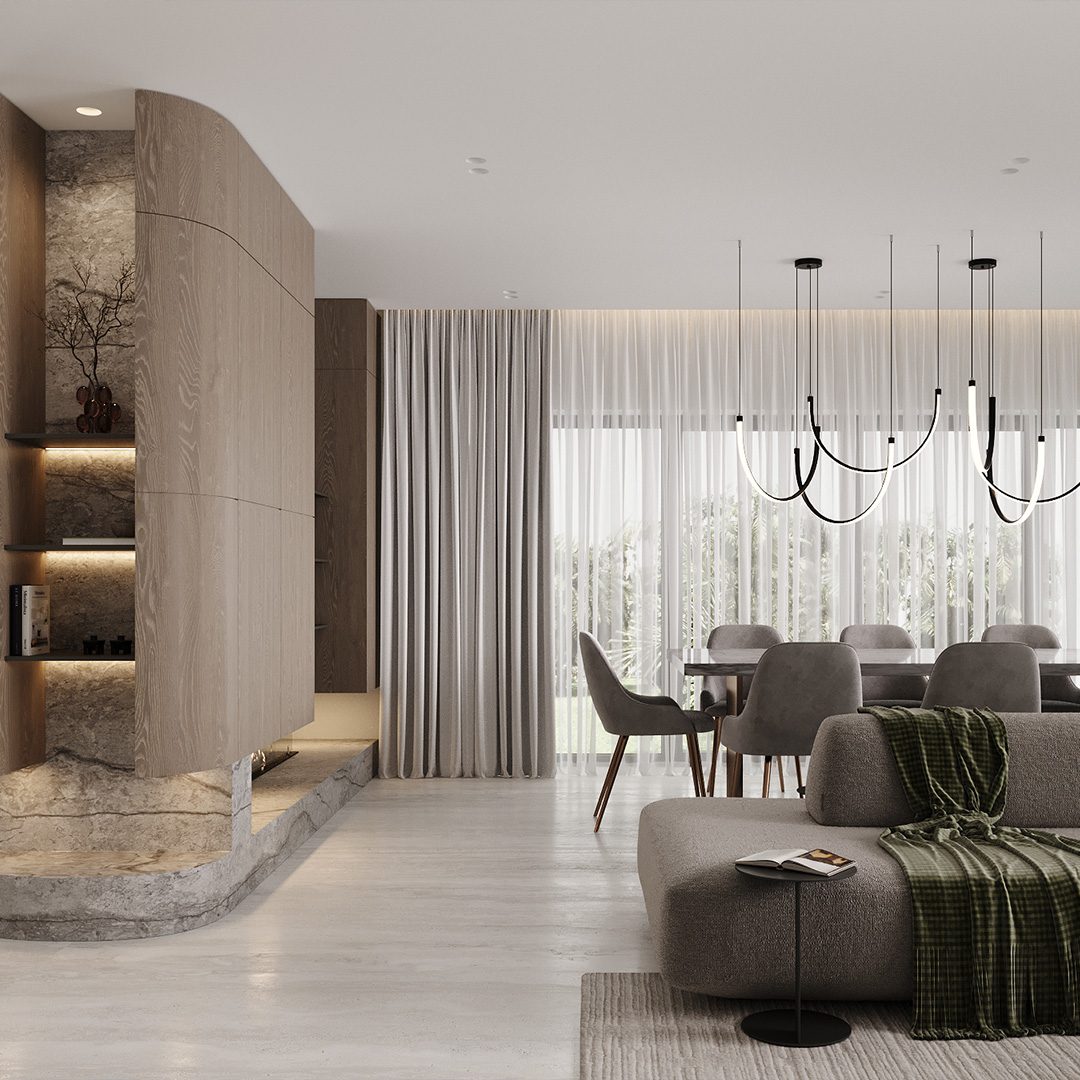
Ask to see how a design translates into something a construction team actually builds from. Some firms produce beautiful concept renders that are essentially marketing visuals, with a separate, much less detailed set of construction drawings. Others – and this is worth specifically asking about – use the render itself as a working document, detailed enough that it’s used to test and resolve design decisions before construction drawings are even issued. The difference shows up in how closely your finished space resembles what you were shown at the start.
Questions About Project Management
Design quality gets most of the attention, but project management is what determines whether your experience over the coming months is smooth or stressful.
6. Who is my single point of contact, and how often will I get updates?
In a fragmented model, you might be fielding calls from a designer, a contractor, a project manager, and a furniture supplier – all with slightly different information. Ask upfront: who is my one point of contact for the entire project, and what does the update cadence look like? A clear answer here is a strong signal of a well-run interior design consultation Dubai process from day one.
7. What happens when something needs to change mid-project – and who absorbs the cost or time impact?
Changes happen on almost every project – a material is out of stock, a site condition reveals something unexpected, or you simply change your mind about a detail. What matters is how the firm handles it. Is there a clear process for change requests? Is there transparency about cost and timeline impact before the change is made, not after? Firms that are vague on this question tend to be the ones where “small changes” quietly become major budget and schedule issues.
8. How do they handle furnishing and styling – is it part of the same process, or a separate add-on?
Furnishing and styling are often where a project either comes together beautifully or falls slightly flat – even when the construction and finishes are excellent. If furnishing is treated as a separate, later-stage add-on with its own supplier and timeline, there’s a real risk of mismatched scale, color, or style relative to the architecture and interior design that’s already been completed. Ask whether furnishing and styling are planned as part of the same overall concept from the start, by the same team – this is often what separates a house that looks finished from one that feels finished.
Red Flags to Watch For
Some warning signs are subtle, but they tend to predict how the rest of the relationship will go.
- Vague timelines with no milestones. “A few months” isn’t a timeline. A firm that’s run projects like yours before should be able to give you a phased breakdown, even if exact dates shift slightly.
- Reluctance to show real project examples or connect you with past clients. Confidence in past work usually comes with a willingness to show it – and, where appropriate, let you hear from people who’ve been through the process.
- Pressure to sign quickly, or unwillingness to walk through the process in detail before you commit. A good interior design consultation Dubai experience should leave you with more clarity, not less.
- No clear answer on who handles construction. If this question gets a vague or evasive answer, it’s worth probing further – it usually means design and build sit with different parties, with all the coordination risk that implies.
- Renders that look disconnected from any technical drawing. If a firm can’t explain how their visuals connect to what gets built, there’s a real risk the finished space won’t match what you were shown.
- Contracts that don’t clearly define scope, payment milestones, or what happens if timelines shift. A well-run firm will have these details documented clearly before work begins – not left to be figured out as the project progresses.
- A portfolio that’s all style, no substance, when you ask follow-up questions. It’s reasonable to ask how a particular space was achieved – what the original layout looked like, what changed structurally, how long it took. A firm that’s genuinely involved in the full process should be able to talk through these details naturally, not just describe the finished look.
How Leif Approaches Client Onboarding
When a new client comes to Leif, the first conversation isn’t about materials or finishes – it’s about how you actually live. What does your day look like? What spaces do you use most, and which ones currently don’t work for you? What does comfort mean for your household, practically speaking? This isn’t a formality; it shapes every decision that follows.
From there, our team – the same team that will carry the project through to completion – develops an initial concept direction grounded in that conversation. Because design, construction, and styling sit within one team rather than being split across firms, every recommendation made at this early stage already accounts for what’s realistic to build and within what timeframe.
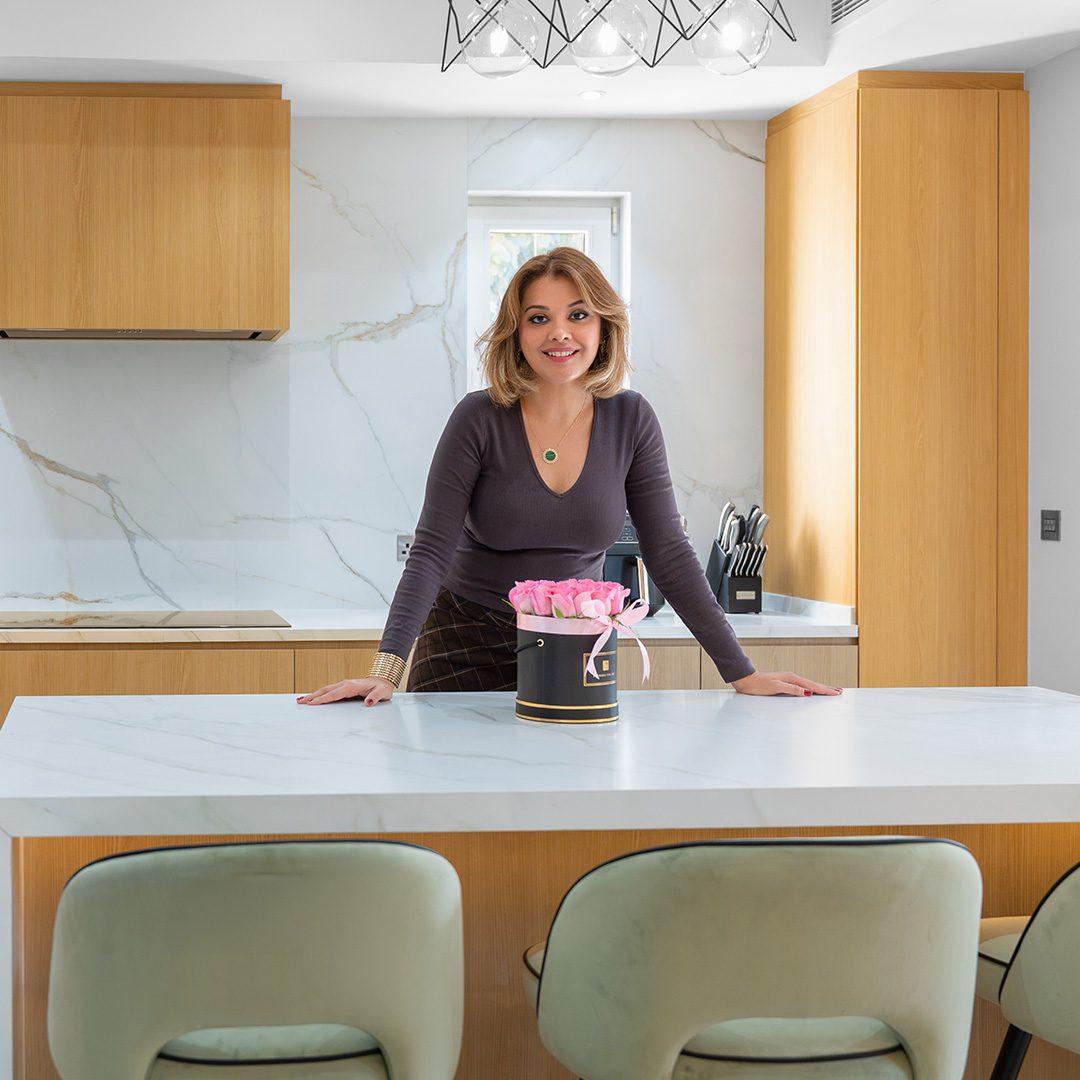
Throughout onboarding, you’ll have one clear point of contact, and conversations are kept honest – including about timelines, budget implications, and trade-offs, rather than over-promising early and adjusting expectations later. Our founder Shalini, who brings two decades of construction, design, and project delivery experience, remains closely involved from concept through completion on every project – which is part of why accountability stays consistent throughout.
If you’d like to understand more about the people behind this process, our About page covers the team and approach in more detail, and our Projects page shows how this onboarding translates into completed homes.
The Leif Way
What ties all of this together is a simple idea: design and execution sitting under one roof means fewer gaps, clearer decisions, and a finished space that looks like what you were shown at the start.
The Leif Way means thoughtful planning from the very first conversation, materials chosen with both beauty and durability in mind, meticulous attention to details that are easy to overlook – hardware, lighting, transitions between rooms – and a deep respect for how a space needs to function, not just how it photographs.
If you’re currently weighing your options and want to talk through what a project like yours would involve, get in touch – we’re happy to walk through the process, timeline, and what working together would actually look like, with no pressure to decide on the spot.