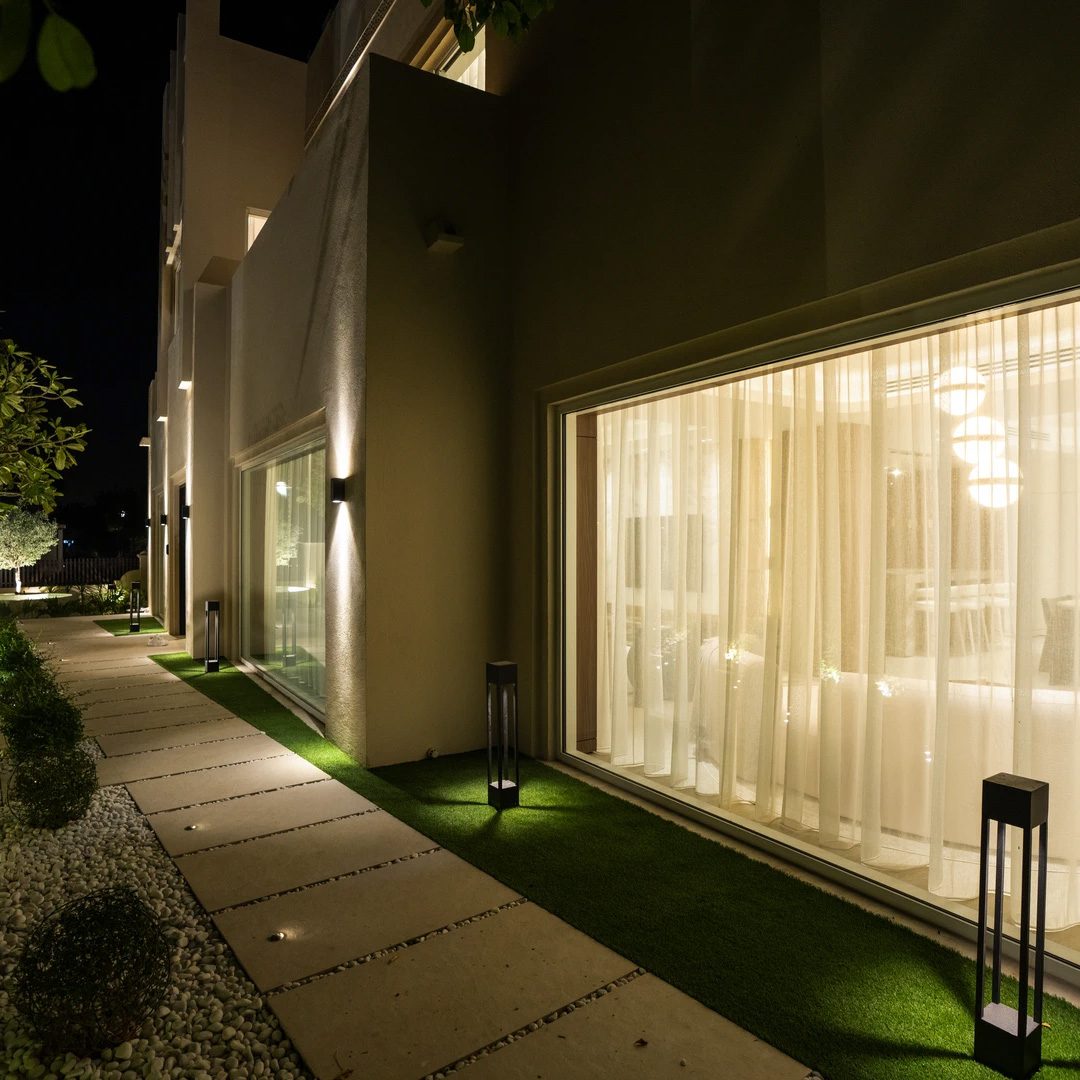

Jumeirah Islands is exactly what it sounds like, 50 artificial islands, each holding its own cluster of villas around a network of interconnected lakes. That layout creates two renovation realities most general Dubai guides don’t cover well: a strictly enforced Mediterranean architectural language across the whole community, and construction logistics genuinely shaped by island access.
Quick Answer
Villa renovation in Jumeirah Islands requires a Nakheel Home Modification NOC, reviewed against the community’s Mediterranean design guidelines, followed by a Trakhees CED building permit for structural work. External materials, render colours, and rooflines must match the community’s established Mediterranean character, and construction logistics need to account for the island setting’s access and delivery constraints.
A Strictly Enforced Mediterranean Identity
Unlike Emirates Hills, where every villa is architecturally unique, Jumeirah Islands enforces a consistent Mediterranean design language across the community. Nakheel’s design guidelines cover external materials, render colours, and rooflines specifically to preserve that visual consistency, and a proposed renovation is checked against that standard rather than against the individual villa’s own history.
This matters practically for anyone planning an exterior renovation. A material or colour choice that reads as tasteful in isolation can still be rejected at NOC review if it departs from the community’s Mediterranean palette, so confirming the approved materials list before finalising any exterior design is worth doing early rather than after drawings are complete.
The Approval Process
Jumeirah Islands sits under Nakheel, which means the approval path follows Nakheel’s two-stage structure rather than Emaar’s.
| Step | What it covers |
| Nakheel Home Modification NOC | Reviewed against Jumeirah Islands’ Mediterranean design guidelines; covers structural, external, and boundary changes |
| Trakhees CED Building Permit | The construction authority permit for structural work, using Trakhees’ own drawing format, not Dubai Municipality’s |
| DEWA final inspection | Required before final sign-off, particularly for MEP or load changes |
Minor interior work that doesn’t touch structure, MEP, or exterior appearance generally doesn’t need a formal NOC, though Nakheel recommends notifying them regardless. Anything touching windows, paint, boundary walls, or an extension needs full approval. A BUA-increasing extension also triggers Nakheel’s AGFA fee, confirmed at the conditional NOC stage rather than fixed citywide, so it’s worth getting that number in writing before finalising an extension’s scope.
Island Logistics: The Constraint Most Guides Miss
Every island in Jumeirah Islands is its own small, self-contained cluster, connected to the rest of the community by limited access routes. That has a genuine practical effect on how a renovation runs, not just how it’s approved.
- Material deliveries and equipment access need planning around each island’s specific access routes, since large deliveries or heavy equipment aren’t always as straightforward as pulling a truck up to a typical mainland villa
- Site logistics have to respect the shared island environment, since neighbouring villas on the same small island are more directly affected by construction noise, access, and storage than in a larger, more spread-out community
- Nakheel’s community NOC on Jumeirah Islands can take longer than on some other Nakheel communities, so building extra time into the schedule for this step is realistic planning rather than pessimism
Design Considerations for Lake-Facing Waterfront Villas
Most Jumeirah Islands villas have a lake or waterfront-facing aspect, which shapes the design brief in ways similar to, but distinct from, Palm Jumeirah’s coastal considerations.
- Orienting living spaces and glazing toward the water while respecting the community’s Mediterranean facade requirements is the central design tension on most renovation briefs here
- Materials suited to lakeside humidity and reflected light, similar logic to coastal specification, but with less direct salt exposure than a beachfront Palm villa
- Privacy from neighbouring waterfront villas, since lake-facing plots on the same island tend to sit in closer proximity to each other than on a larger mainland plot
- Resort-style pool and outdoor living upgrades are a consistently popular renovation request here, given how central the lake setting is to the community’s appeal
Frequently Asked Questions
Can I use any exterior material I want on a Jumeirah Islands villa renovation?
No. External materials, render colours, and rooflines must conform to the community’s established Mediterranean architectural guidelines, checked at the Nakheel NOC review stage. A design that departs noticeably from that palette risks rejection or a required resubmission.
Does Jumeirah Islands use the Emaar or Nakheel approval system?
Nakheel. Renovations require a Nakheel Home Modification NOC followed by a Trakhees CED building permit for structural work, rather than Emaar’s Home Modification and Design Review Committee process.
Why does construction take extra planning in Jumeirah Islands?
Each island in the community has its own limited access routes, which affects material deliveries and equipment access. Community NOC review here can also take longer than in some other Nakheel communities, so it’s worth building extra time into the project schedule.
Planning a renovation for a Jumeirah Islands villa? Talk to Leif about designing within the community’s Mediterranean guidelines while making the most of your waterfront aspect.