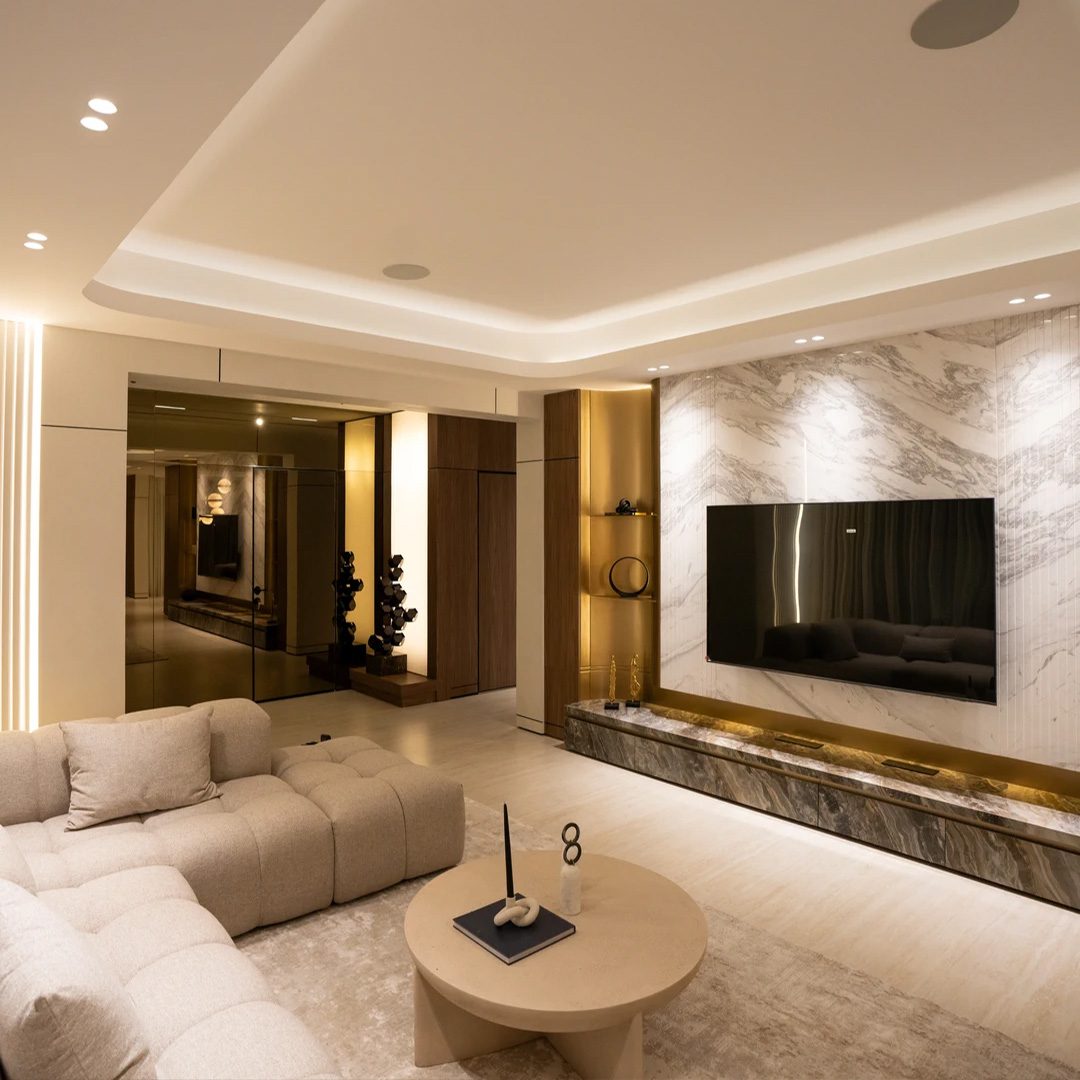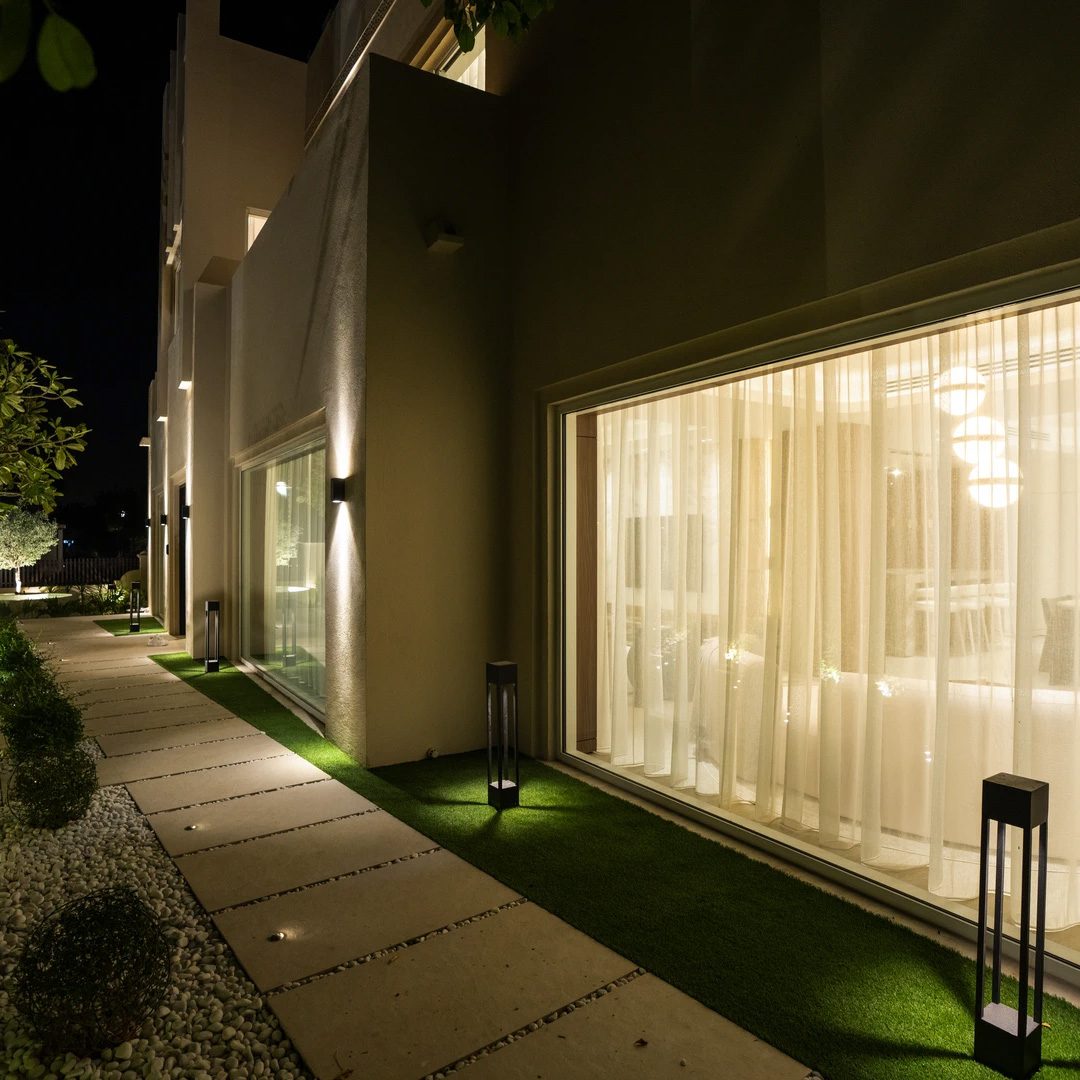

You’ve priced out the build cost per square foot and it looks manageable. Then a fee shows up from your community’s developer that’s bigger than the construction itself, and nobody warned you about it. This happens more often than it should, and it’s usually the single biggest reason villa extension budgets in Dubai go wrong.
This guide breaks down what a villa extension actually costs in 2026, the fee most cost guides gloss over, and how the approval process differs depending on which developer your community sits under.
Quick Answer
A villa extension in Dubai typically costs AED 100,000 to AED 350,000 for a ground-floor room addition, and AED 250,000 to AED 600,000+ for a second-floor addition, depending on size and finish. On top of construction, Emaar communities charge a GFA fee of roughly AED 700 to AED 1,000 per square foot of new built-up area, which is frequently the largest single cost on the project.
What Actually Counts as an Extension (Not Just a Renovation
A renovation reworks the space you already have. An extension adds built-up area (BUA) to your villa, which is a legal distinction, not just a construction one. Adding a bedroom, enclosing a covered terrace, or building a second storey all increase your BUA and trigger a different approval process than an interior renovation would.
This matters because plot coverage and BUA limits are set per community, not per villa. Before any design work starts, it’s worth checking what your plot is actually permitted to add, since a layout that works on paper can still get rejected at the review stage if it pushes past the community’s coverage ratio.
Villa Extension Cost by Type
Costs vary significantly by extension type, mainly because of structural complexity. A single-storey addition connects to an existing foundation. A second-floor addition has to be carried by walls and columns that may not have been designed with future vertical expansion in mind, which is where costs jump.
| Extension type | Typical cost | Notes |
| Garage or maid’s room conversion | AED 60,000 to 120,000 | Minimal structural change, fastest to approve |
| Ground-floor room addition (bedroom, office, gym) | AED 100,000 to 350,000 | Most common request, 30 to 80 m² typical |
| First-floor or second-storey addition | AED 250,000 to 600,000+ | Requires structural assessment of existing structure |
| Detached structure (pool house, majlis, guest suite) | AED 350,000 to 800,000+ | Independent foundation, full MEP and finishing |
| Covered terrace or pergola enclosure | AED 600 to 1,200 per sq.ft | Lower structural complexity, faster build |
These figures cover design, structural work, MEP, and internal finishing to a mid-to-high specification. They exclude land, remedial structural work on existing foundations where required, and the fee covered in the next section, which for many Emaar villas is the real budget-mover.
The Fee Most Guides Don’t Lead With: GFA Charges
Here’s what regularly catches homeowners off guard. If your community falls under Emaar, any increase in your villa’s Gross Floor Area gets charged separately from the construction cost, typically in the range of AED 700 to AED 1,000 per square foot of new BUA. For a modest 400 sq.ft addition, that alone can run into the hundreds of thousands of dirhams, often exceeding the structural engineering and permit fees combined.
This isn’t a hidden fee in the sense of being undisclosed. It’s published in developer guidelines. It’s just routinely left out of the headline cost figures that circulate in general renovation guides, because those figures are usually quoting pure construction rates. If you’re budgeting from a per-square-foot build number alone, in an Emaar community, you are very likely underbudgeting.
Nakheel and DAMAC communities structure this differently, with fees varying by community rather than a flat citywide rate, so it’s worth confirming the applicable charge for your specific community before finalising a design that assumes a particular BUA increase.
Why Older Villas Need a Structural Assessment First
If you’re adding a second floor, or extending an upper floor that already exists, the ground-floor walls, columns, and foundation have to carry that additional load. Villas built in the 1990s and early 2000s were not universally designed with future vertical expansion in mind, and there’s no way to know without an assessment.
A licensed structural engineer needs to review the existing structure before design work goes further. A few things worth knowing:
- If strengthening is required, that cost has to be built into the budget from day one, not discovered mid-construction after demolition has already started
- Structural consultant fees typically run AED 7,000 to AED 20,000, separate from the actual reinforcement work if it’s needed
- Skipping this step to save time is the single most common reason villa extension projects blow their budget partway through
Villas built more recently, including most of Dubai Hills Estate’s post-2018 stock, tend to have more headroom for vertical additions, but “tend to” is not the same as “confirmed,” and it’s still worth the assessment.
Permit Process by Developer
Every villa extension needs approval before construction starts, and which authority reviews it depends on your community’s developer, not on the scope of the extension itself.
| Developer | Communities | Process |
| Emaar | Arabian Ranches, Dubai Hills Estate, The Springs, The Meadows, Emirates Hills | Submit via the Emaar Community Portal; Design Review Committee reviews structural and external changes; GFA fee applies on new BUA |
| Nakheel | Palm Jumeirah, Jumeirah Islands, Jumeirah Park, JVC, JVT | Submit to Nakheel Community Management; Palm Jumeirah applications route through Trakhees rather than Dubai Municipality |
| DAMAC | DAMAC Hills and related communities | Submit to DAMAC Facilities Management |
| No master developer | Older mainland plots | Dubai Municipality building permit only, no developer NOC layer |
Developer NOC fees generally run AED 5,000 to AED 25,000 before GFA charges, and review typically takes two to four weeks for a standard extension once drawings are complete and correctly formatted for that specific authority. Submitting drawings prepared for the wrong authority’s format is one of the most common causes of avoidable delay.
Realistic Timeline From First Meeting to Move-In
Most full villa extensions in Dubai run three to six months from initial consultation to handover, broken down roughly as:
- Design and drawings: 2 to 4 weeks
- Developer NOC and permit approval: 2 to 8 weeks, depending on community and scope
- Construction: 8 to 16 weeks, depending on extension type and finish level
- Snagging and final handover: 1 to 2 weeks
Second-floor additions and detached structures sit at the longer end of this range because of the added structural review, while a straightforward ground-floor room addition can move through the process faster.
Extension vs Buying a Bigger Villa (H2)
Before committing to an extension, it’s worth running the comparison honestly. A mid-sized extension in the AED 200,000 to AED 400,000 range is, in most cases, still meaningfully cheaper than the transfer fees, agent commission, and price premium involved in moving to a larger villa in the same community, before accounting for the time and disruption of a move itself.
The calculation shifts if your existing plot has limited coverage headroom, or if the structural assessment comes back requiring significant reinforcement. In those cases, the extension cost can climb closer to what a move would cost, and it’s worth having that number in hand before design work goes too far. This is exactly the kind of check a design-and-build partner should run with you early, not after drawings are already finished.
Frequently Asked Questions
How much does it cost to add a room to a villa in Dubai?
A single ground-floor room addition, such as a bedroom or home office, typically costs AED 100,000 to AED 350,000 depending on size and finish level, before any applicable GFA fee from the community developer.
What is the GFA fee and does it apply to my villa? (H3)
The GFA (Gross Floor Area) fee is a charge on any increase in your villa’s built-up area, applied by master developers, most notably Emaar, at roughly AED 700 to AED 1,000 per square foot of new BUA. It applies in addition to construction cost and is often the largest single line item on an extension project.
Do I need a structural engineer before extending my villa upward? (H3)
Yes. A second-floor or upper-floor addition adds load to the existing walls, columns, and foundation, and older villas were not all designed with that in mind. A structural assessment before design work begins is the only way to know whether reinforcement is needed, and what that adds to the budget.
How long does villa extension approval take in Dubai? (H3)
Developer NOC and permit approval typically takes two to eight weeks depending on your community and the scope of the extension, on top of two to four weeks for design and drawings before submission.
Thinking about a villa extension and want a realistic budget for your specific plot and community? Talk to Leif about your project, or see our complete villa renovation cost guide for a broader breakdown across renovation types.